
I’ve been obsessed with EDC for almost 10 years, and I’m particular about what goes in my pockets. Very particular.
For the last 6 years, I’ve been chasing the perfect minimalist wallet; something that disappears in my front pocket, holds exactly what I need, and doesn’t fall apart after three months.
I’ve bought the same wallet three times. I’ve spent $120 on carbon fiber. I even tried strapping my wallet to my phone to see if I could eliminate a pocket entirely.
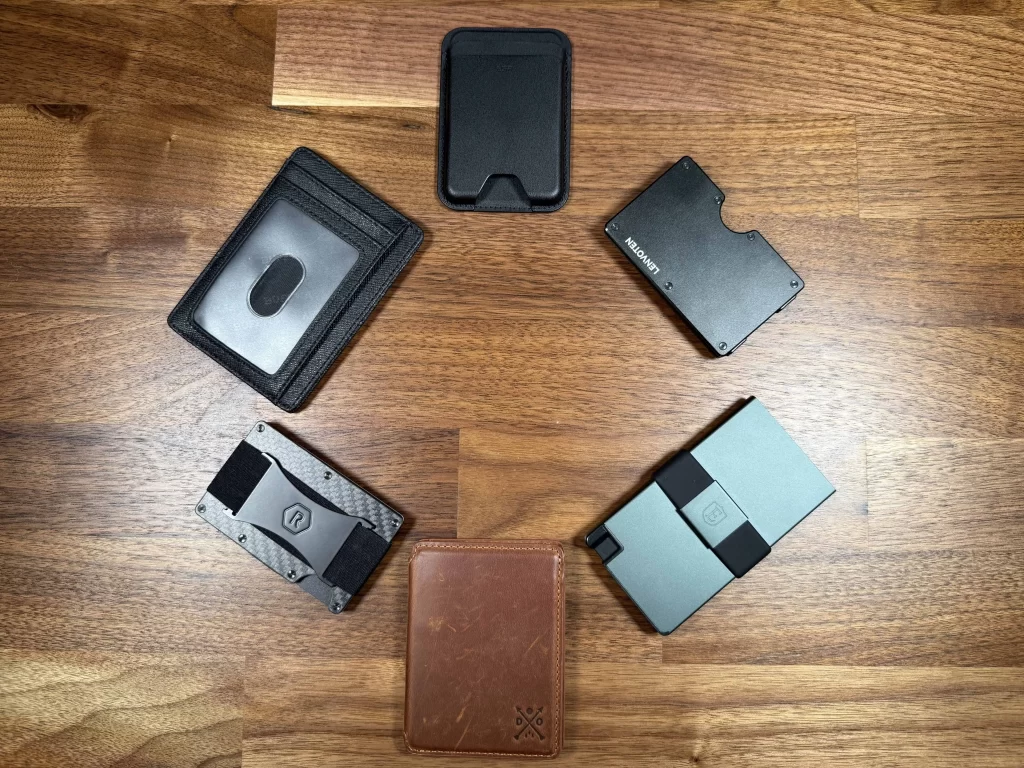
Here’s what I learned testing 6 different minimalist wallets, including:
- The $120 premium standard everyone compares to
- The $15 budget option I bought three times
- The leather bifold that became my daily carry
- A MagSafe wallet that eliminates pockets (sort of)
Plus, I have a baby. So every wallet got the “One Arm Test”, because if I can’t access my ID while holding a toddler, it’s useless to me.
What You'll Find in this Review
- Honest testing methodology (I actually carried these)
- Real pros and cons (I’m not paid by any of these brands)
- Clear recommendations based on YOUR needs
- The wallet I actually carry daily
Let’s get into it.
How I Tested These Wallets
I didn’t just unbox these and write reviews. Each wallet went through the same evaluation:
Initial Assessment (First 30 minutes)
- Unboxing and first impressions
- Build quality inspection
- Measurements (thickness, dimensions)
- Material quality evaluation
Capacity Testing
- Maximum card capacity (how many ACTUALLY fit comfortably?)
- Cash capacity (folded once? twice? how much?)
- Real-world load (my actual EDC: [X] cards, [X] bills)
Daily Carry Testing
- Front pocket test (does it disappear or create bulk?)
- Back pocket test (if applicable)
- Access speed (how fast can I get my card out?)
- Durability observations (what wears first?)
The One Arm Test
This is my unique criteria. I have a baby, which means I frequently need to access my wallet while holding a child, groceries, or coffee.
If I can’t pull out my ID or credit card one-handed, that’s a significant drawback. Most reviews skip this, I made it a priority.
What I Tested
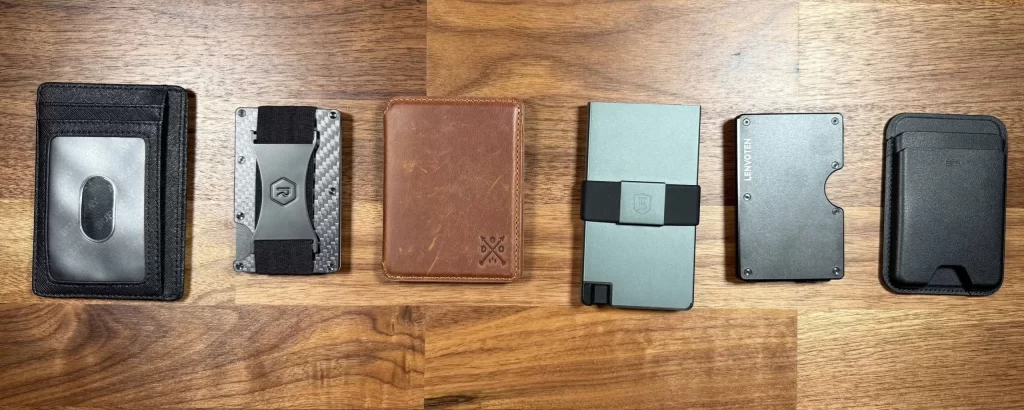
- Ridge Carbon X3 – $120
- Lenvoten Minimalist – $30
- Ekster Aluminum Cardholder Pro – $119
- Double Oak Cloud Wallet – $90
- Buffway Slim Minimalist – $20
- ESR Magsafe – $20
Quick Comparison: All 6 Wallets at a Glance
| Wallet | Price | Card Capacity | Material | One-Arm Friendly? | Rating |
|---|---|---|---|---|---|
| Ridge Carbon X3 | $120 | 4-12 cards | Carbon Fiber | ❌ | 8/10 |
| Lenvoten Minimalist | $30 | 4-12 cards | Aluminum | ❌ | 5/10 |
| Ekster Aluminum Cardholder Pro | $119 | 5-7 cards | Aluminum | ✅ | 8.5/10 |
| Double Oak Cloud | $90 | 4-6 cards | Leather | ✅ | 9/10 |
| Buffway Slim Minimalist | $20 | 5-11 cards | Faux Leather | ✅ | 7/10 |
| ESR MagSafe | $20 | 2-5 cards | Vegan Leather | ❌ | 7/10 |
Legend: ✅ = Easy one-handed access | ❌ = Nearly impossible
Ridge Carbon X3 - $119
First Impressions
The Ridge Wallet unboxes like a premium tech product. Sleek packaging, magnetic mounts, even its own screwdriver and spare screws in a tiny envelope. Thanks, Apple, for making everyone over-design their boxes.
What surprised me is that it’s smaller than it looks in videos. The MagSafe adapter is clever for minimalists, a wallet on your phone means one less pocket. But without the extra mounting plate, it twists off too easily. With my phone’s kickstand case? Forget it.
Build Quality
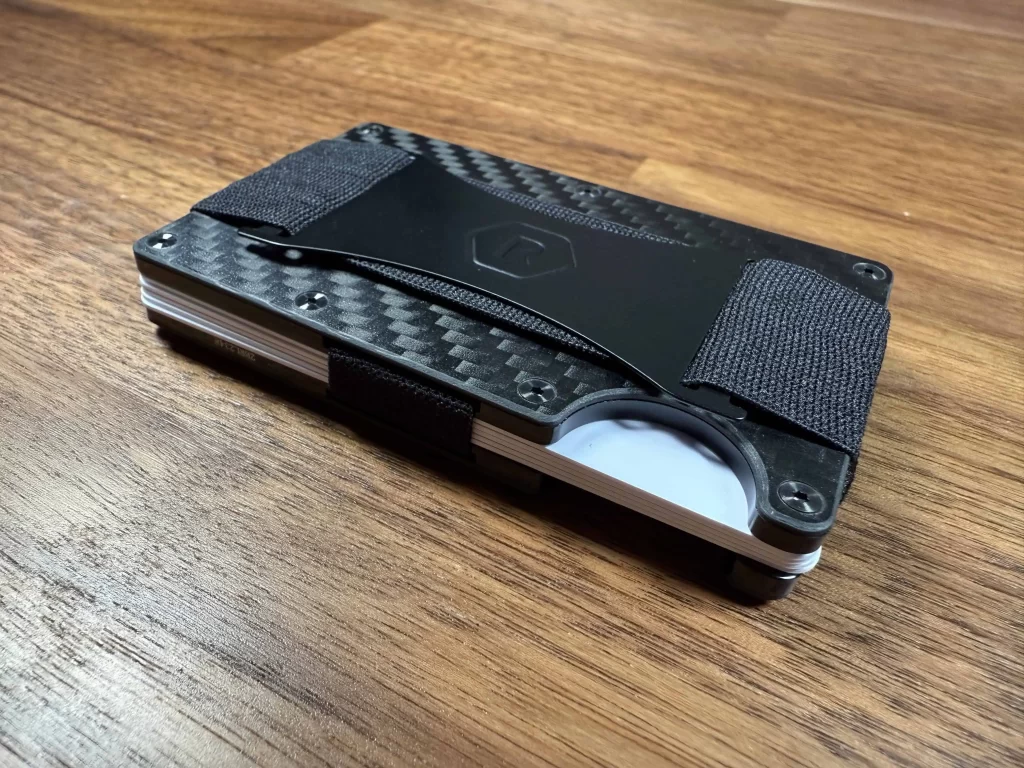
Carbon fiber feels like you’re carrying a race car. Recessed screws, reinforced elastic band, premium materials, this thing screams quality. At $120, it better.
Ridge’s blog covers maintenance (keeping the band tight, avoiding smudges). I’m not usually a “maintain my wallet” guy, but at this price point, it makes sense.
Capacity & Fit
Ridge’s website claims you can fit up to 12 cards. You can fit 12 cards in, but it’s tight and very difficult to manage. I only really need 4-5 cards, which was very manageable.
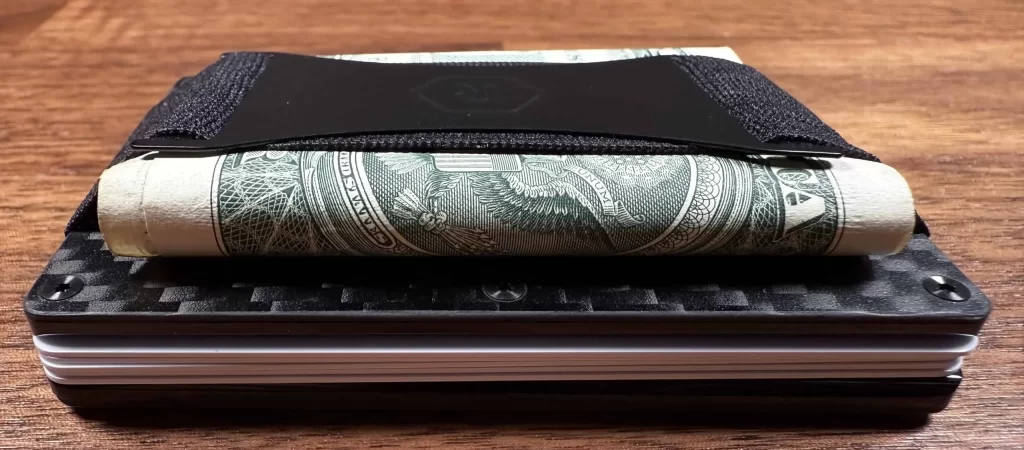
The cash strap required the bills be folded twice, limiting how much you can fit comfortably, but since the strap is elastic you can really push this a bit. I managed 10 bills folded this way and could probably fit a few more before it became unmanageable.

Daily Carry Experience
The pocket feel is perfect, barely noticeable all day. But the “all cards in one slot” design? Not for me.
Getting my main card out is fine. Getting the THIRD card? I’m pulling out the whole stack. Getting one card BACK IN when the fit is this tight? Annoying.
The cash strap holds bills folded twice. Tested with 10 bills comfortably, could fit more. Since I rarely use cash, this works fine.
One Arm Test
Good effing luck getting anything out of this wallet with one hand. I tried pushing just one card up at a time, that didn’t work. You can eventually push all of the cards up, in the meantime I’ve just about pushed all the cash out of the cash strap and feel like a magician playing with a deck of cards. Eventually you can do it, but you may look like a baboon while you try it.
Pros & Cons
Pros
- Extremely low profile in pocket
- Premium build quality justifies the price
- Sleek, race-car aesthetic
- Holds exactly what I need, nothing more
Cons
- Managing individual cards is frustrating
- Getting cards back in takes effort
- Single-slot design isn’t quick-access
- One-handed use? Nearly impossible
Who It's For
If you are looking for something super sleek, well built and crafted that’s low profile and can get the job done as a minimalist wallet, the Carbon x3 is a great option. You have to really like the “single large slot for all of your cards” method of wallet to get good use out of this. If you do, this is probably the wallet for you.
Final Verdict
I get why Ridge dominates this market. Strong branding backed by a legitimately premium product. The build quality is there, the minimalism is there.
But it’s not for me. Between the card management issues and my need to function one-handed (thanks, baby), I need something more practical.
However, if you love the single-slot aesthetic and use both hands, this is probably the best-built wallet in this category.
Lenvoten Minimalist Wallet - $29.99
First Impressions
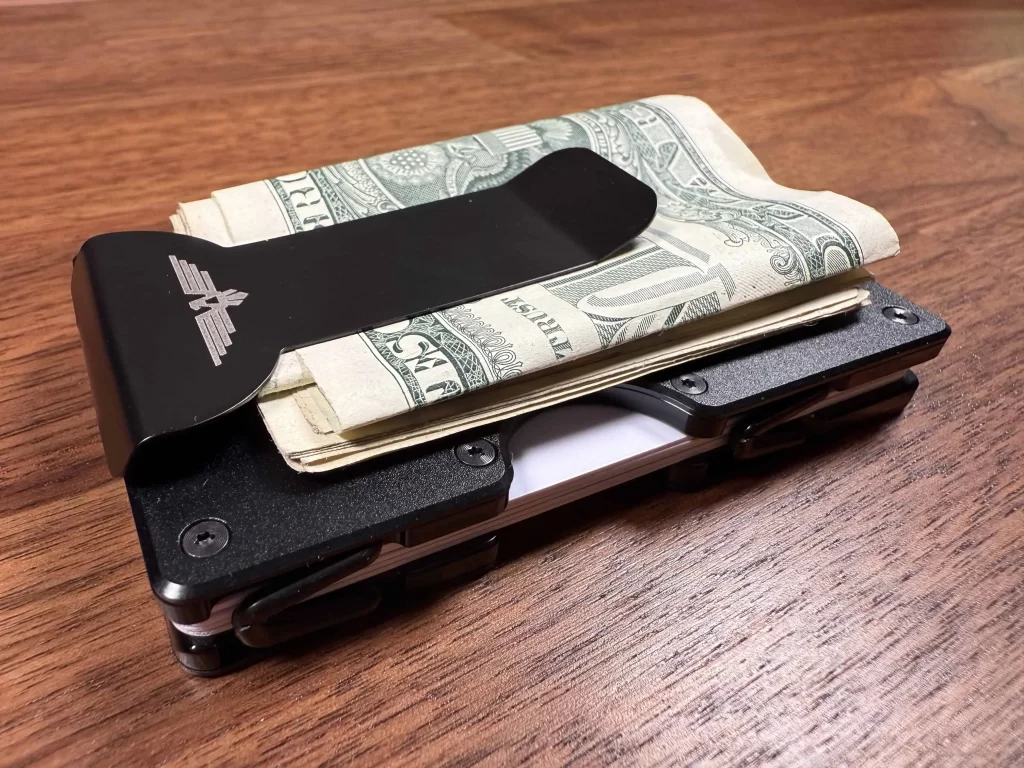
I was very interested in getting my hands on the Lenvoten wallet as an inexpensive alternative for the Ridge and let me tell you, they really did their best to mimic everything they could with the Ridge, down to the box. The slide over cover, the recessed casing, the little screwdriver which is surprisingly hefty.
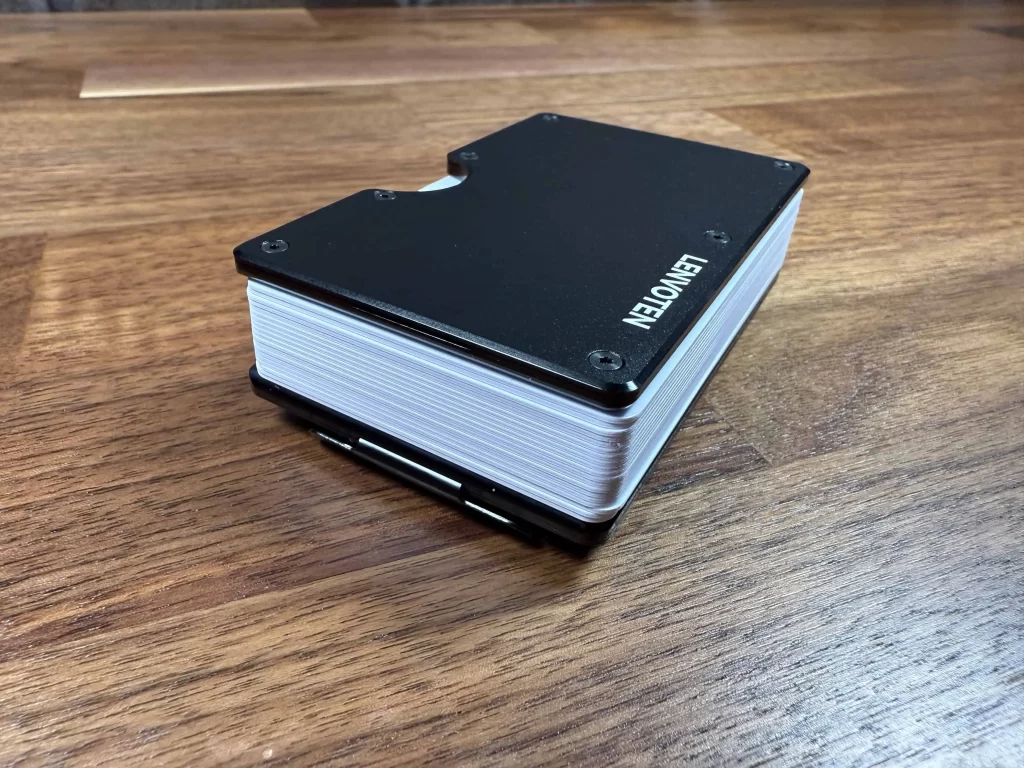
The wallet itself is nearly identical in build. The size is identical, the function is identical, the number of screws is identical. The only major differences I can see are the money clip,the spot where you push up the cards, and the strange mechanism they use for extending the wallet. There’s no elastic band, which the Ridge also uses to protect the shorter sides of the card, only exposing one side to where cards can slide out. The top and side of the Lenvoten are open, which does make it easier to remove cards but I also feel could leave the cards open to damage unless you align them all yourself.
This last one is petty, but it’s my blog so I’ll say it: their support email is literally theirname@gmail.com. For $30, fine. But if you’re trying to compete with Ridge, at least get a branded email domain. It screams “dropshipping operation” more than “legitimate brand.”
Build Quality
The build quality is surprisingly good for the price. There is a noticeable difference in the material compared to the Ridge, and I’m very curious how long these little arm mechanisms used to extend the wallet will hold up over time, but nothing sticks out as cheap or poorly made.
Capacity & Fit
I pushed the boundaries and stuffed 20 cards into this thing. It fits! The pocket feel? Like carrying a deck of playing cards, according to my wife. I tested the Ridge with 20 cards too, equally ridiculous side by side.
With my actual 5-card EDC, both wallets looked nearly identical in thickness and pocket profile.
Cash with the metal clip is tougher. 10 bills folded twice had to be forced under the clip and felt janky. 5 bills worked better, they slide to the top without prying the clip off.
Daily Carry Experience
Similar to the Ridge in most ways, but that metal clip is CONSTANTLY noticeable. Every time I touch my pocket or adjust in a chair, I feel it catch. The Ridge’s elastic strap disappears by comparison.
You can angle the clip inward (pokes your leg) or outward (catches on everything). Neither option is comfortable. This alone would prevent me from daily carrying it.
One Arm Test
I didn’t even bother. Same single-slot design as the Ridge means the same impossible one-handed access. You’re fumbling with the whole stack, cards are sliding everywhere, and that money clip is now poking your hand while you try.
If the Ridge scored poorly here, this is equally bad, just with the added bonus of a metal clip stabbing you in the process.
Pros & Cons
Pros
- Extremely low profile in pocket
- Similar design to the Ridge wallet, a little more modern feeling
- Holds exactly what I need, nothing more
Cons
- Same as the Ridge, managing individual cards is frustrating
- Metal money clip sticks out more than I’d like and you can feel it whether pointed in against your leg or pointed out and you touch the outside of your pocket
- One-handed use? I didn’t even bother
Who It's For
If you’re into the Ridge wallet but don’t like the steep price tag, this is a reasonable substitution for a similar experience.
Final Verdict
If the money clip was flush like Ridge’s elastic strap, this would be a legitimate alternative at 1/4 the price. The build quality is there, the function is nearly identical, and $30 is way easier to justify than $120.
But that clip ruins it. It’s annoying, noticeable, and constantly catching on things.
My take: If you’re budget-conscious and rarely carry cash, try it. Otherwise, save the extra $90 for the Ridge. The elastic strap alone is worth the difference.
Rating: 5/10 (Would be 7/10 without that money clip)
Price: $29.99
Ekster - Aluminum Cardholder Pro Wallet - $119
First Impressions
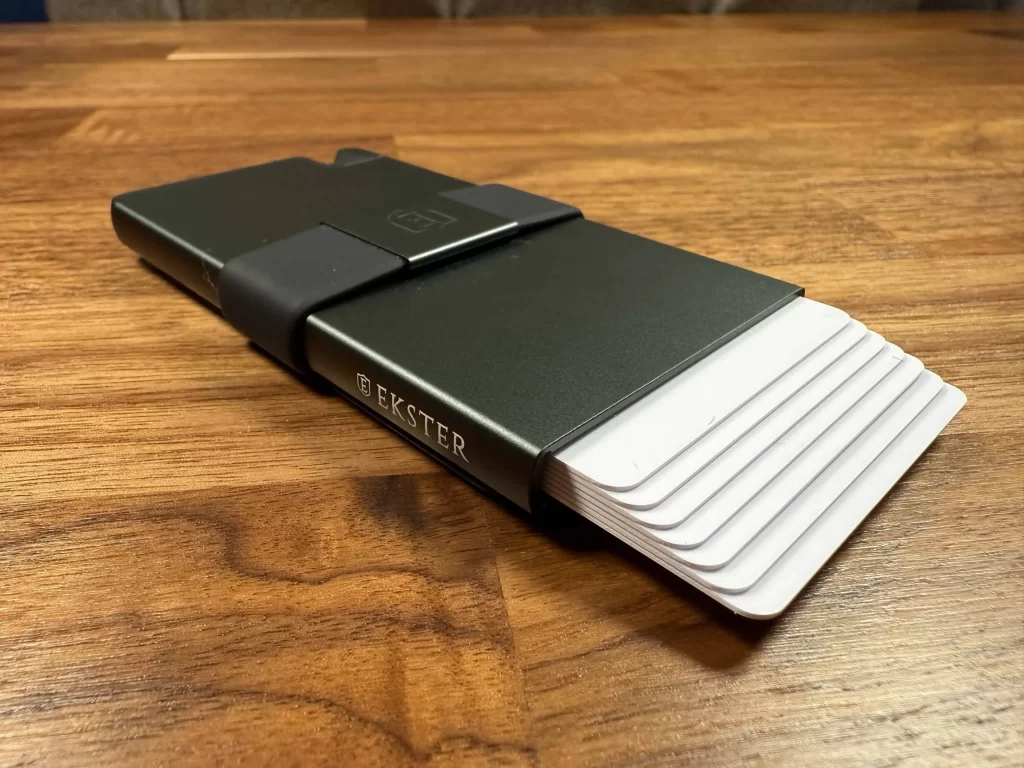
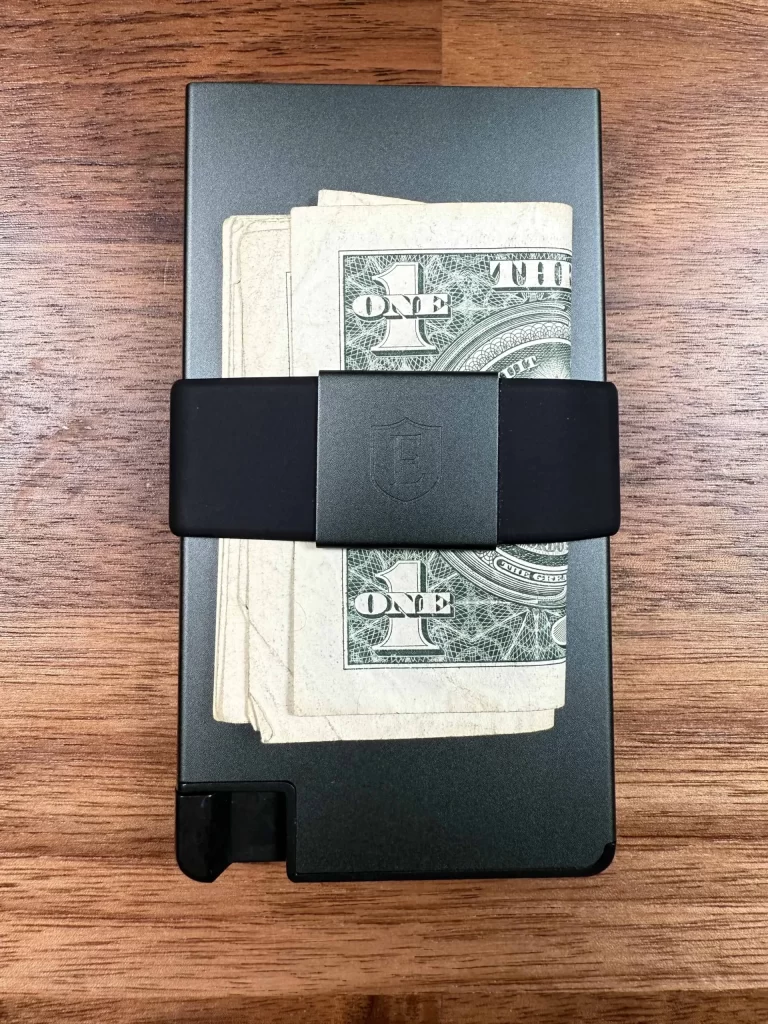
The Ekster arrives in simple packaging, press-fit box, wallet, and marketing materials. The front slot has instructional cardstock, and the spring-loaded holder pops up 6 cards in succession telling the brand story and showing features.
This wallet is probably the coolest I tested, and a main reason I picked it. The spring mechanism reminds me of noir detectives with spring-loaded cigarette cases, or outlaws hiding cards up their sleeves in westerns.
It’s just rad.
Build Quality
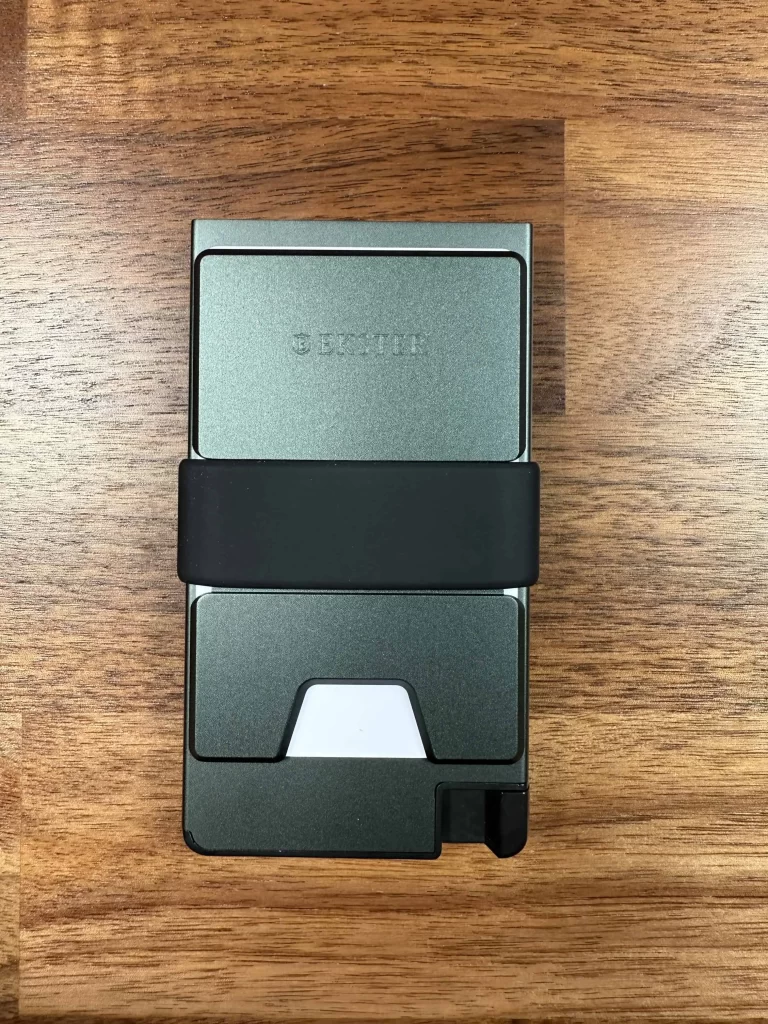
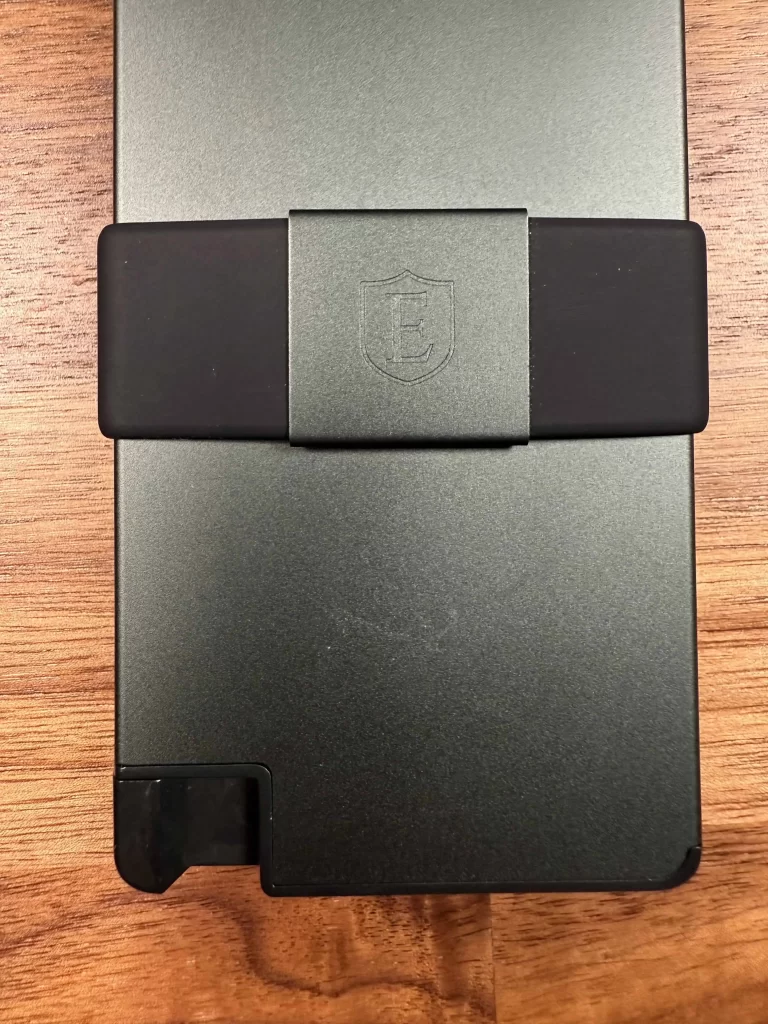
The case appears to be one formed sheet of aluminum, with an exterior card slot held by a rubber strip that feels like Apple Watch band material. The spring mechanism is solid; cards pop out in a satisfying stagger. Lightweight but substantial in hand. This feels deliberately engineered, not gimmicky.
Capacity & Fit
Card capacity:
- Spring-loaded top slot: 5-7 cards (this is the main feature)
- Front exterior slot: 1 card comfortably (2 is super tight and doesn’t function well)
- Cash band: Could theoretically hold cards, but impractical
Ekster claims 1-12 card capacity. I have no idea how you’d fit 12 cards. The spring slot holds 5-7, front slot holds 1-2 max. Unless you’re jamming cards under the cash band (which defeats the purpose), 6-8 cards total is realistic.
My configuration: 1 card front slot (primary card), 4 in spring slot. Works perfectly.
The metal card problem: Plastic cards stay secure in the spring slot. My metal card slides right out if I shake the wallet upside down. This is a significant issue if you carry premium metal cards.
Cash capacity: 5 bills folded twice, maximum. The rubber band is stiff and leaves dirt marks on the aluminum (they rub off, but annoying). If you rarely use cash, this works. If you carry cash regularly, this is frustrating.
Thickness: Comparable to Ridge, very slim in pocket.
Daily Carry Experience
Like other minimalist wallets, this disappears in your pocket, no more noticeable than my phone in the other pocket.
Minor annoyances:
- The aluminum edges can catch your fingers when fishing for keys or AirPods
- The rubber cash band catches on bills, you have to really press down to secure them
- Rubber attracts fingerprints and pocket lint (just like Apple Watch bands)
The upside is I still feel like James Bond using that spring-loaded slot. It’s genuinely fun.
One Arm Test
Now for my favorite one arm test, which I actually did holding a baby this time. The main card slot on the front is pretty easy to work with one handed. The spring loaded slot is surprisingly manageable as well, you can operate the spring with one hand since the mechanism is squeezed and since the cards all come out staggered you can push down the cards you don’t want and get the one you do. Good luck getting the card back in order if you are a little OCD, but you can get the card back in one handed.
Pros & Cons
Pros
- Spring-loaded mechanism actually solves the Ridge’s card access problem
- Staggered card display makes finding the right card easy
- One-handed operation works (tested while holding baby)
- Aluminum construction looks premium and modern
- Metal design limits card capacity (forces minimalism)
Cons
- Metal cards slide out of spring slot (dealbreaker for premium card carriers)
- Cash band is limiting and awkward to use
- Rubber material attracts lint and fingerprints
- Sharp edges can catch fingers in pocket
- Confusing capacity claims (12 cards? Where?)
Who It's For
This is for people who:
- Love the Ridge’s slim profile but hate the card access
- Carry standard plastic cards (not metal)
- Rarely use cash
- Want a conversation piece wallet
- Appreciate functional design that’s also fun to use
Not for: Anyone with premium metal cards (they’ll fall out), frequent cash users, or people who need 8+ card capacity.
Final Verdict
I really like this wallet, more than I expected. The spring mechanism isn’t a gimmick; it’s a genuine solution to the single-slot access problem that plagues the Ridge and similar wallets.
The tension: This came down to Ekster vs Double Oak for my daily carry. Both scored high, both solve different problems.
What killed it: My metal Amex slides out of the spring slot without engaging the mechanism. For my vanity project (keeping that card pristine), this is a dealbreaker.
If I carried all plastic cards? This would be my choice over the Ridge. Better access, same slim profile, way more fun to use.
Double Oak Cloud Wallet - $89
First Impressions
The box immediately takes my mind to an upscale cigar bar or golf club house. I don’t smoke, but the drink sounds nice.
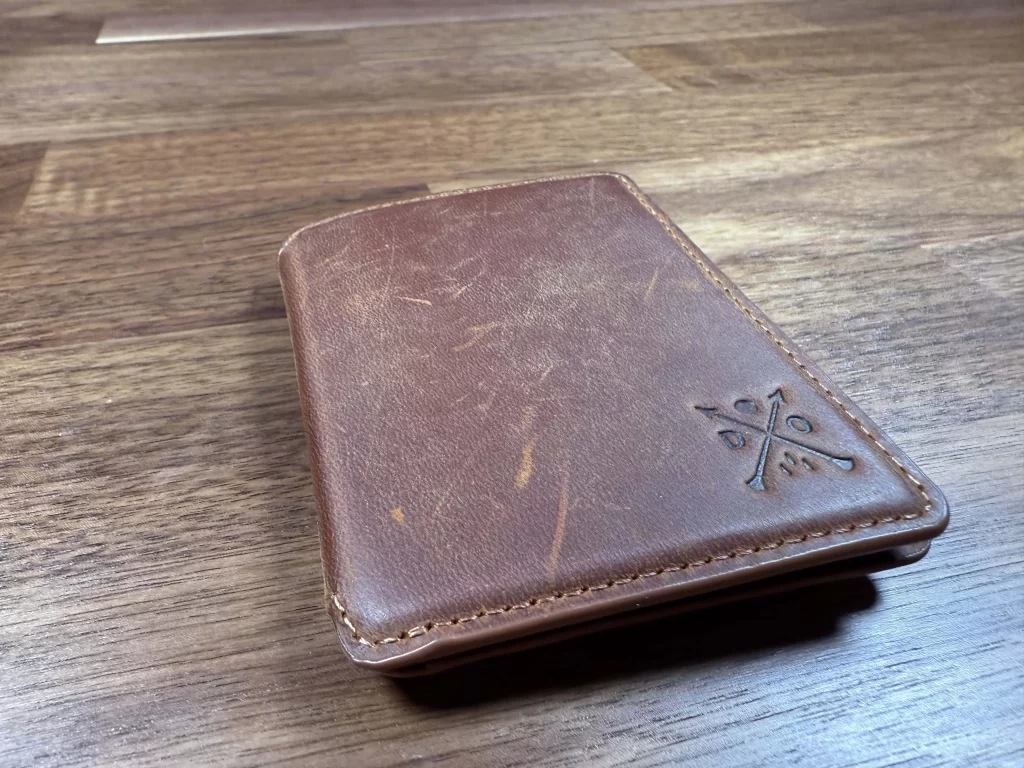
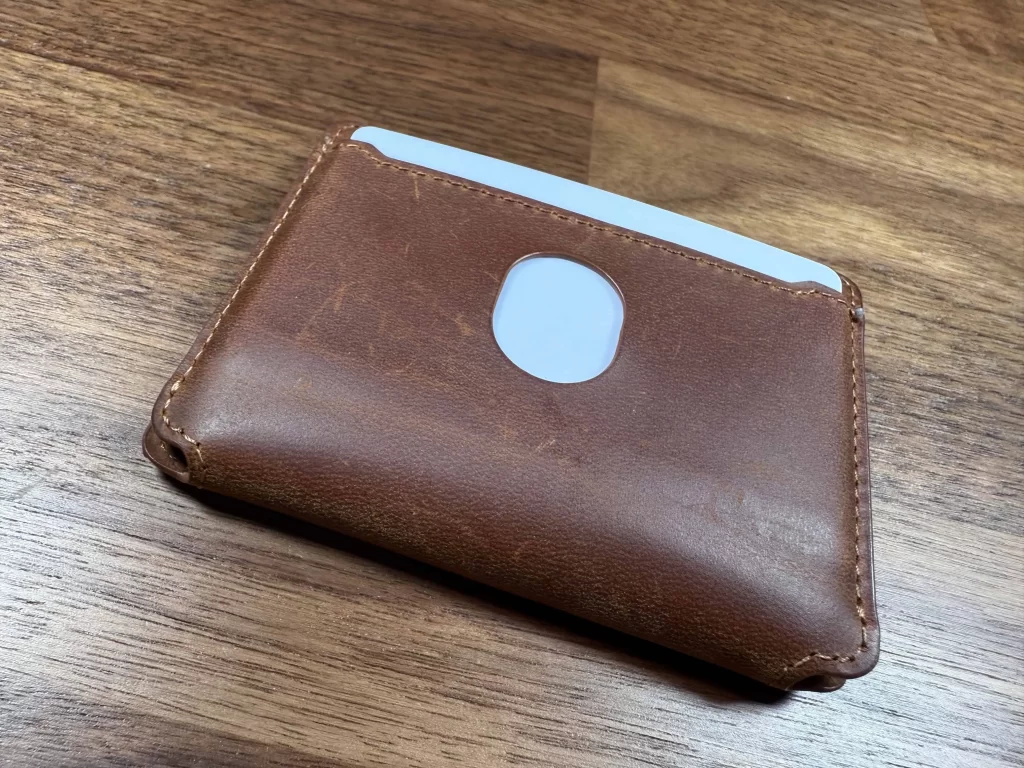
I originally bought this for a vain reason: protecting my new Amex card from the wear that smaller minimalist wallets cause. This one folded AND stayed shut with magnets? Perfect.
Build Quality
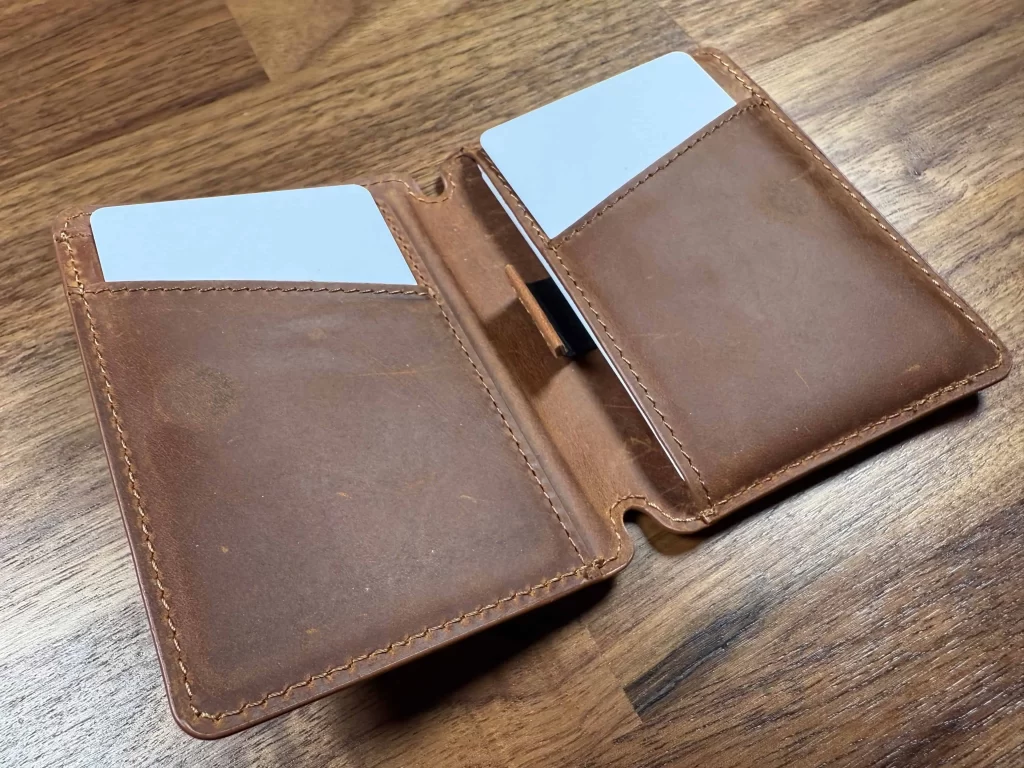
The leather looks premium, stitching is clean and consistent, and the fabric interior only shows when the wallet’s open. The pull tab is simple and efficient. The magnets that hold it closed are strong enough to feel secure but barely noticeable. Elegant solution.
Capacity & Fit
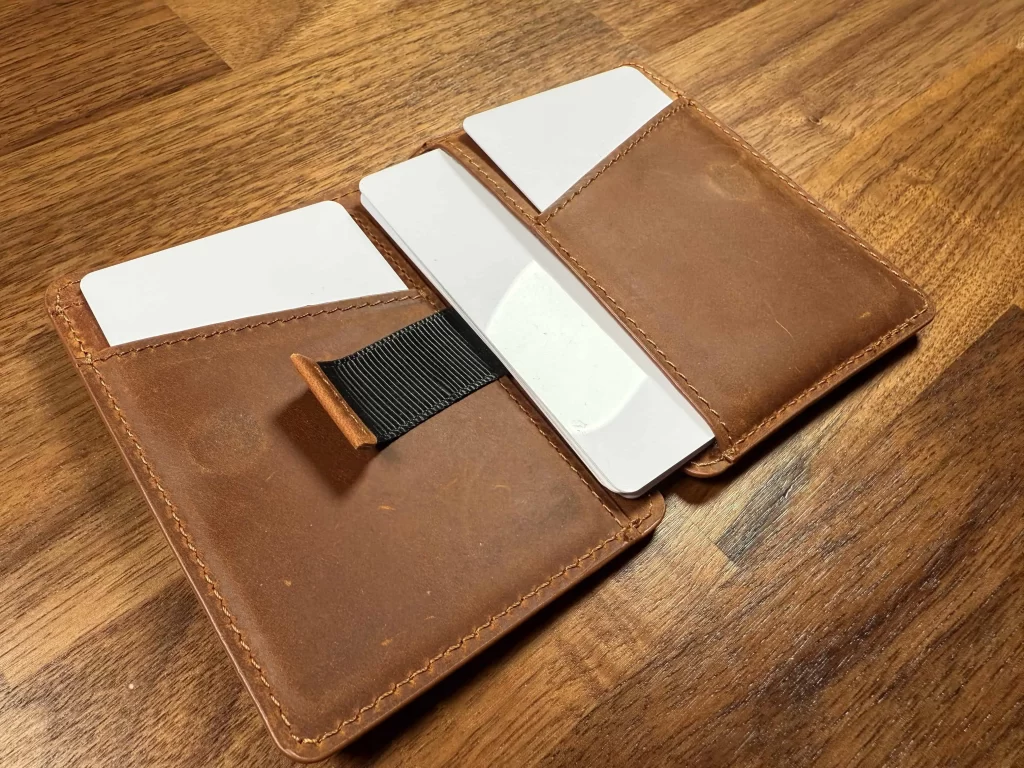
Card capacity:
- Exterior slot: 1 card
- Two interior slots: 1 card each
- Pull-tab holder: Up to 5 cards (but gets tight)
- Hidden slot (cash area): Best for thin cards/business cards
Reality check: I carry one metal card (Amex) plus two standard cards in the pull-tab, one in each interior slot. That’s 4 cards total, wallet stays slim in front pocket.
Cash capacity: 5-7 bills folded in half max. Beyond that, the magnet struggles to hold closed.
Daily Carry Experience
I’ve carried this for 6 weeks now, replacing my previous favorite (which I’ll get to later). Passes the front pocket test, barely notice it throughout the day.
The leather shows slight wear around the magnets, but otherwise feels brand new. Most importantly? My vanity project is alive, that Amex card still looks pristine!
One Arm Test
Night and day difference from the Ridge.
Outside slot? Easy one-handed access. Inside slots? Requires slightly more finesse but totally doable. Putting cards back? No problem.
This is what practical design looks like.
Pros & Cons
Pros
- Extremely low profile in pocket
- Premium leather, very high quality
- Feels like a fancy accessory, something you want to show off
- Holds more than I need it to, room to grow without over expanding the foot print
Cons
- Little bit of visual wear where the magnets are
- Very limited cash holding capacity
Who It's For
This wallet is perfect for someone who likes the functionality of a traditional wallet in a smaller footprint. The leather style is more sophisticated than the carbon fiber or some cheaper materials.
Final Verdict
The Double Oak Cloud Wallet is my current daily carry for a reason. It checks every box: lightweight, slim, passes the pocket test, one-arm usable, holds all my necessary cards, and looks sophisticated.
For my needs, protecting cards while staying minimal, this is perfect.
If you carry lots of cash or need more than 5-6 cards, look elsewhere.
Rating: 9/10 (Perfect for me, minus points for limited cash capacity & magnet wear)
Price: $89.99
Buffway Slim Minimalist - $19.99
First Impressions
Full disclosure: I’m reviewing this wallet after buying it three separate times. If that doesn’t tell you whether it’s worth trying, I don’t know what will.
I bought my first Buffway in 2019 for one reason: cheap entry into minimalist wallets.
I was tired of traditional Target/Kohls wallets, too bulky, back-pocket pain, looked like I was smuggling something in my front pocket. The Buffway was $20, slim enough to disappear in my front pocket, and if it sucked I was only out $20.
It didn’t suck. I bought the exact same wallet again in 2021 when the first one fell apart. Couldn’t be bothered to research alternatives, this one worked.
Then I bought it AGAIN. That’s 6 years of loyalty to a wallet that costs less than lunch.
Build Quality
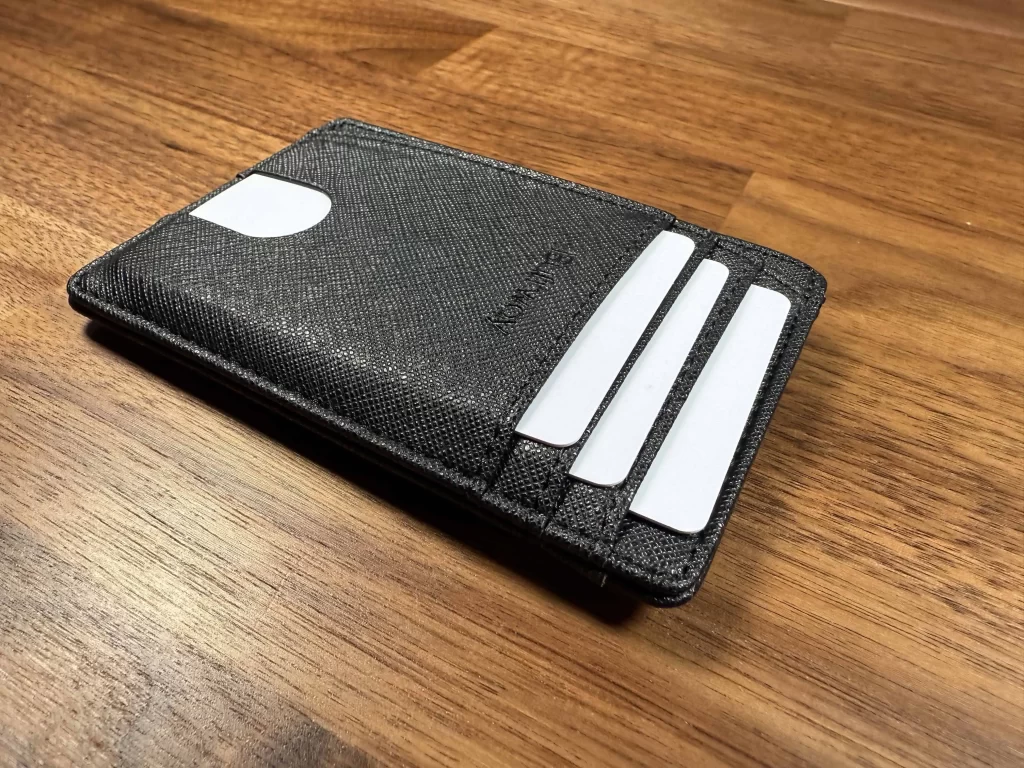
The wallet is exactly what you’d expect for the price. Functional but cheap materials.
Here’s what happens after 6-12 months: The edge trim starts cracking, leaving little rubber bits everywhere. Still usable, but looks beat up.
Durability reality: Each one lasted me about 2 years of daily carry before looking too rough to keep using. At $20 per wallet, that’s $10/year. Acceptable? Depends on your standards.
Capacity & Fit
Card capacity:
- Front slot: 2 cards
- Back slot: 3 cards
- Side pockets (2): 3 cards each
Maximum capacity: 11 cards if you really jam the side pockets. You aren’t fitting much else at that point.
Reality check: I carried 5-7 cards total over 6 years—2 front, 2-3 back, 1-2 in side pockets. The side pockets work better for overflow or business cards rather than frequently-used credit cards. Daily access from side pockets is awkward.
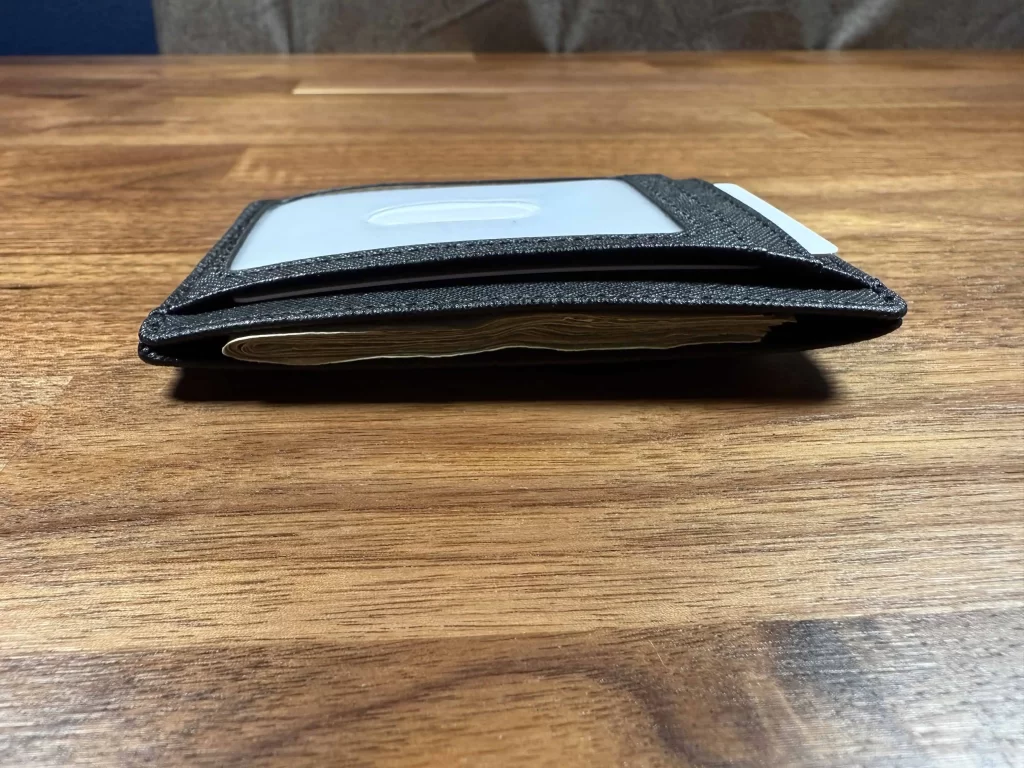
Cash capacity: 10 bills folded once fits, but it’s pushing it. 5-7 bills is more comfortable.
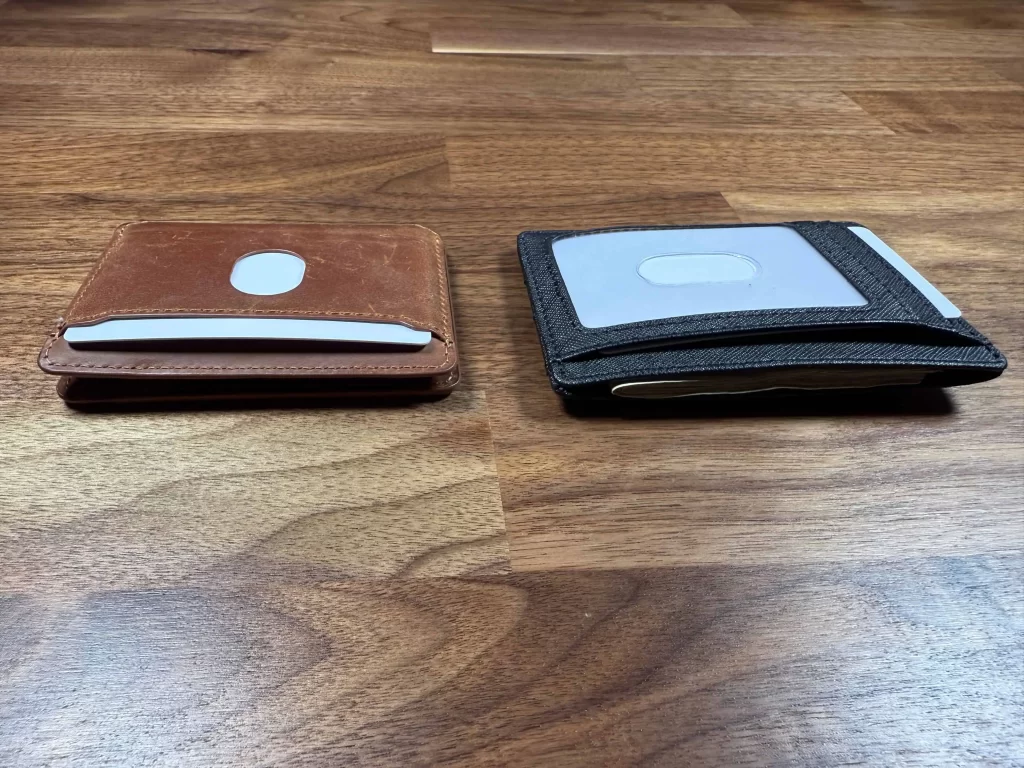
Thickness with my typical load (5 cards + 5 bills): Roughly the same as the Double Oak loaded with the same items.
Daily Carry Experience - 6 Years Later
The Buffway just works. Pick it up, pocket it, forget about it.
The small footprint leaves room for AirPods and keys, other wallets crowd the pocket more. Primary card slot has perfect tension, card slides out and back with zero resistance.
The wear issue is real: Cards in the outside slots get exposed edges. They fray faster, collect grime, leave gross lines across white cards. My metal cards showed visible wear after a year. That’s what finally pushed me to the Double Oak.
The ID window? Marginally functional. You ALWAYS have to pull the card out anyway because the window obscures the DOB. Basically a decorative feature.
One Arm Test
This is where Buffway shines compared to Ridge/Lenvoten.
Front slot card? Slide it out one-handed, easy. Back slot? Same deal. Side pockets require two hands but those are overflow anyway. Putting cards back? No resistance, just slides in.
After 6 years, I could pull my ID out of this wallet while holding a baby, coffee, and my dignity. That’s the real test.
Pros & Cons
Pros
- Super small footprint
- Holds just enough to be functional
- Super simple to use, easy access to important cards
- Barely noticeable in the pocket
- Inexpensive
Cons
- Looks like it’s a cheap wallet
- Clear window slot is marginally functional
- Holds up about as well as you’d expect a cheap wallet
- Very limited size compared to other minimalist wallets
- Due to the easy access slots being outwardly facing, it wears the exposed parts of the credit cards down and leaves a line across them
Who It's For
Entry level minimalist wallet carriers. Someone who has a smaller budget or just wants a taste of what a truly small wallet has to offer. It’s easier to go to slightly larger wallets from this wallet, or you may find the pairing to be therapeutic and just stick with it.
Final Verdict
I bought this wallet THREE TIMES over 6 years. That should tell you something.
It’s not fancy. It won’t last forever. Your cards will show wear. But for $20? It does exactly what it promises: disappears in your pocket and holds your essentials.
I only switched because I wanted to protect my fancy new Amex (vanity, remember?). If I didn’t care about card wear, I’d still be carrying this.
This is the wallet I recommend to anyone trying minimalism for the first time. Low commitment, high function, easy to upgrade from later if you want to.
Rating: 7/10 (Would be 9/10 with better materials and durability)
Price: $19.99
ESR Magsafe - $19.99
First Impressions
The ESR MagSafe wallet opens like something from Best Buy’s store brand section, but for $20, does it need fancy packaging?
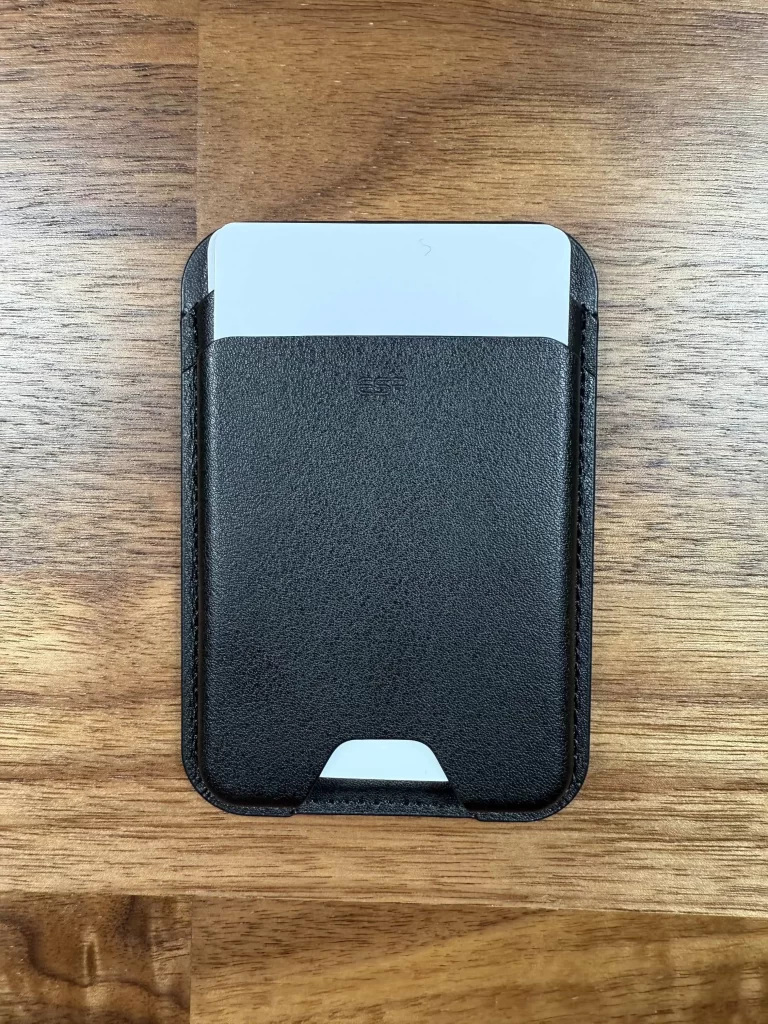
The material looks and feels like leather (probably faux, but convincing). Small, sleek, genuinely minimalist. The MagSafe grip is STRONG, I have to twist hard to remove it from my phone.
If we’re going truly minimalist, what’s better than eliminating a pocket entirely by slapping your wallet to your phone?
ESR specializes in iPhone accessories, not wallets. But they’re really damn good at iPhone accessories, so I gave it a shot.
Build Quality
Build quality on this wallet is surprisingly good for being a ~$15 on sale wallet. I mentioned the leather material feel already, the stitching looks good, and there are no visible defects. It looks and feels like a quality product.
Capacity & Fit
Card capacity:
- Total: 5 Cards
- Front slot: 1 card (they probably intended this for cash, but cash doesn’t work)
- Back slot: 4 cards comfortably
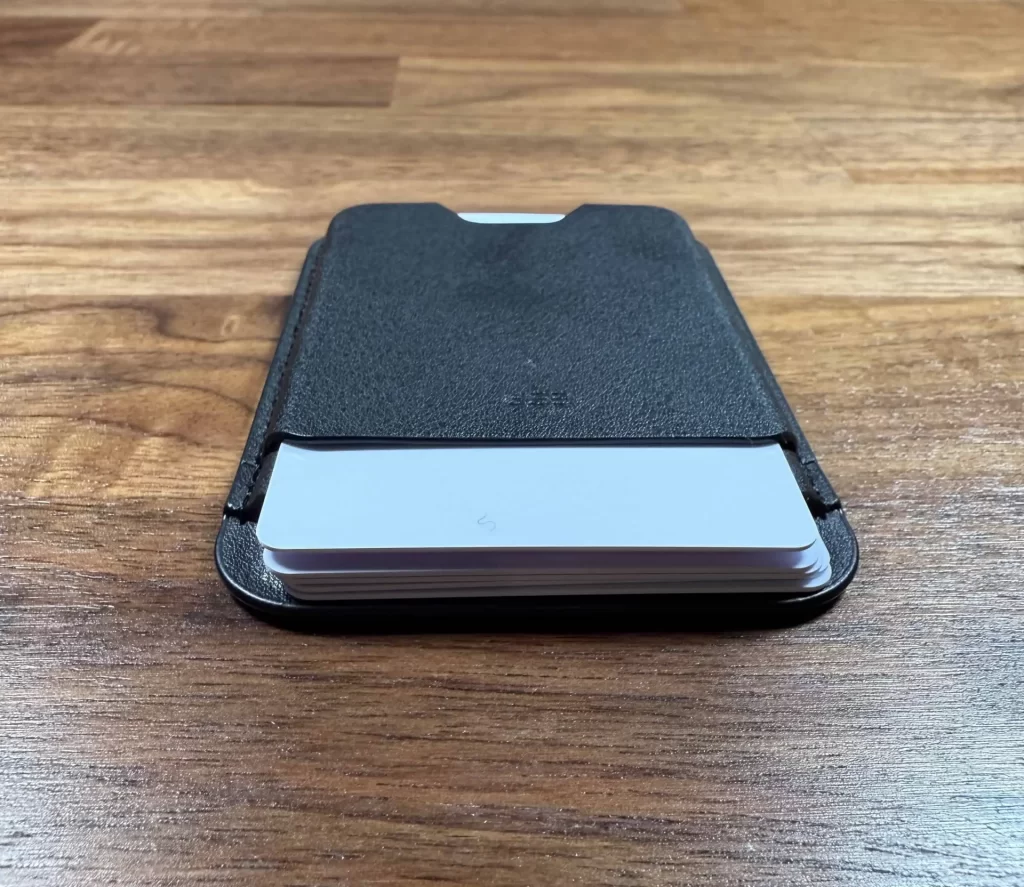
Reality check: I loaded 5 cards total (1 front, 4 back). Four cards in the back slot is the sweet spot, 5 cards doesn’t work, the wallet won’t expand. Even with just 1 card, it stays secure with minimal wiggle.
Cash capacity: Not realistic. The front slot is too tight for folded bills.
Thickness: Minimal. Barely adds bulk to your phone.
Daily Carry Experience
I use a kickstand case on my iPhone, can’t use the kickstand with the wallet attached, but that’s true for any MagSafe accessory. I only attach the wallet when leaving the house anyway.
The smaller footprint barely increases pocket bulk. My main issue? Brief panic attacks not feeling a wallet in my usual pocket, followed by remembering it’s on my phone.
The weird part: Cards are harder to access when attached to the phone, less leverage to push them up. Since I have Apple Pay, pulling out my phone to access my wallet feels redundant. It’s a constant reminder I should just use Apple Pay more.
Compared to a separate wallet: Slower access, more awkward. But you’ve eliminated an entire pocket item.
One Arm Test
I should record this One Arm Test, speed up the playback 10x and slap on the Benny Hill theme song. It’s practically comedy watching me try to get anything out of this wallet without simply dropping my phone on the ground. The tonal shift from funny to deeply sad music as I pick up the pieces of my screen could net me 10s of views on TikTok.
Pros & Cons
Pros
- Eliminates wallet from pocket entirely
- Very slim, barely noticeable on phone
- Strong MagSafe grip (doesn’t twist off accidentally)
- Forces you to carry less (could be a feature)
- Well-built for the price
Cons
- Harder to access cards than separate wallet
- Makes Apple Pay feel like the smarter choice
- Can’t use kickstand with wallet attached
- One Arm Test? Absolute disaster
Who It's For
This is for iPhone users who:
- Already use MagSafe accessories heavily
- Have overstuffed pockets and need to relocate the wallet
- Want to force themselves to carry fewer cards
- Primarily use Apple Pay but need backup cards/ID
- Don’t mind slightly awkward card access for the pocket space benefit
Not for: People who frequently need quick card access, parents (One Arm Test failure), or anyone without reliable Apple Pay habits.
Final Verdict
This wallet forced me to confront an uncomfortable truth: I should probably just use Apple Pay for everything.
When it works: Day trips, travel, situations where pocket space is premium. Load your ID and 2-3 backup cards, use Apple Pay for transactions. It’s a solid accessory that does its job well.
When it doesn’t: Daily carry if you frequently access cards, need one-handed wallet access, or don’t trust yourself to remember your wallet is on your phone (guilty).
The real value proposition: It’s not about being a better wallet, it’s about eliminating a pocket. If that trade-off appeals to you, this is well-executed at $20.
Rating: 7/10 (Perfect for specific use cases, impractical for daily carry)
Price: $19.99
THE MINIMALIST'S DILEMMA
This wallet made me realize: the most minimalist option isn’t the thinnest wallet, it’s no wallet at all.
If you have Apple Pay, the only reason to carry physical cards is:
- Backup (Apple Pay fails sometimes)
- ID (can’t digitize everywhere yet)
- Specific cards without digital options
The MagSafe wallet is perfect for that reality: 1-2 essential cards, use Apple Pay for everything else.
Is that practical? Depends on your risk tolerance.
My Final Recommendations: Which Wallet Should YOU Buy?
After testing all 6, here’s who should buy what:
🏆 Best Overall: Double Oak Cloud Wallet
Why it wins: Bi-fold slim design protects cards, is easy to use, and offers expandability as needed. Very elegant design
Who it’s for: Anyone looking for a functional, slim wallet with a leather design that says “gentleman”
Price: $90
💰 Best Budget Option: Buffway Slim Minimalist
Why it wins: Entry-level price, reliable performance, low commitment
Who it’s for: First-time minimalist wallet buyers, people who want to test the concept cheap
Price: $20
👔 Best Premium Wallet: Ekster Aluminum Cardholder Pro
Why it wins: Meets all the minimalist criteria, sleek and simple, super cool design
Who it’s for: Someone looking for a modern minimalist wallet with great functionality
Price: $119
🤔 The Controversial Pick: ESR Magsafe
Why it’s interesting: Turns out the most minimal wallet design isn’t really a wallet
Who should try it: tech enthusiasts that are willing to digitize most of what they usually carry in a wallet
Who should avoid it: Anyone distrustful of technology (looking at you Skynet) who needs a little more capacity and functionality
Price: $20
👶 Best for Parents (One-Arm Test Winner): Double Oak Cloud Wallet
Why it wins: Easy one-handed access
Who it’s for: Anyone who frequently has occupied hands
Price: $90
💳 Best Card Protection: Double Oak Cloud Wallet
Why it wins: Cards fully enclosed, no exposed edges
Who it’s for: People with premium metal cards or who want cards pristine
Price: $90
Frequently Asked Questions
Q: What’s the difference between a minimalist wallet and a regular wallet?
A: Minimalist wallets prioritize slim profile and essential capacity over features. Most hold 4-12 cards and limited cash, designed for front-pocket carry. Traditional wallets have multiple card slots, bill compartments, and coin pockets—they’re bulkier but hold more.
Q: How many cards should a minimalist wallet hold?
A: Most people carry 4-8 cards daily (ID, 2-3 credit cards, insurance, maybe a few business cards). I recommend wallets that comfortably hold 5-8 cards with room to grow. Anything claiming 12+ card capacity usually means “technically fits but impractically tight.”
Q: Are Ridge wallets worth the price?
A: If you value premium build quality and don’t mind the single-slot card access, yes. The Ridge is legitimately well-built and will last. But at $120, it’s only worth it if you’re okay with the card management frustrations. For $30 more, the Ekster solves those problems. For $30 less, the Double Oak is more practical for daily use.
Q: What’s the most durable minimalist wallet?
A: Ridge wins on pure build quality—carbon fiber and metal construction will outlast everything else. But “durable” also means “doesn’t annoy you into switching.” I replaced my Buffway 3 times in 6 years ($60 total) and would do it again. The Ridge might last 10 years but if you hate using it, durability doesn’t matter.
Q: Do MagSafe wallets actually work?
A: They work, but with major compromises. The ESR MagSafe holds cards securely and eliminates a pocket, but card access is awkward and one-handed use is impossible. Best use case: travel or situations where you’re primarily using Apple Pay. Not recommended for daily carry unless you’re fully committed to digital payments.
Q: What happens to cards in exposed-slot wallets?
A: Based on 6 years with the Buffway: exposed card edges fray faster, collect grime that leaves dark lines across cards, and metal cards show visible wear within a year. If you have premium cards you want to keep pristine, choose wallets with fully enclosed slots like the Double Oak or Ridge.
Q: How do I know which wallet is right for me?
A: Ask yourself:
- How many cards do I carry daily?
- Do I use cash frequently?
- Do I need one-handed access?
- What’s my budget?
- Do I want card protection or quick access?
Then use my recommendations above to match your needs.
What I Actually Carry
After testing all 6, I’m currently carrying the Double Oak Cloud Wallet.
It was a very close decision between the Cloud Wallet and the Ekster, but ultimately the Cloud Wallet met all of my requirements with the fewest downsides. Ultimately, my vanity project around my Amex card really pushed the decision over the edge since I was worried the metal card would fall out of the Ekster if I wasn’t careful. Both are fantastic options and most people would be happy with either, but the Cloud Wallet edged the rest out and I love using this thing!
Full disclosure: I earn a small commission if you purchase through the links in this article. Ridge, Ekster Buffway, and Lenvoton link to Amazon. Double Oak links directly to their site. Your price stays the same either way, and these are my honest opinions, I bought all of these with my own money.
I test EDC gear because I’m obsessed with finding the right tools for my pocket. If this helped you decide, great. If you have questions, leave a comment in the comment section.
Now go find your perfect wallet.